

Connecticut lawmakers pass landmark bill to ban female genital mutilation
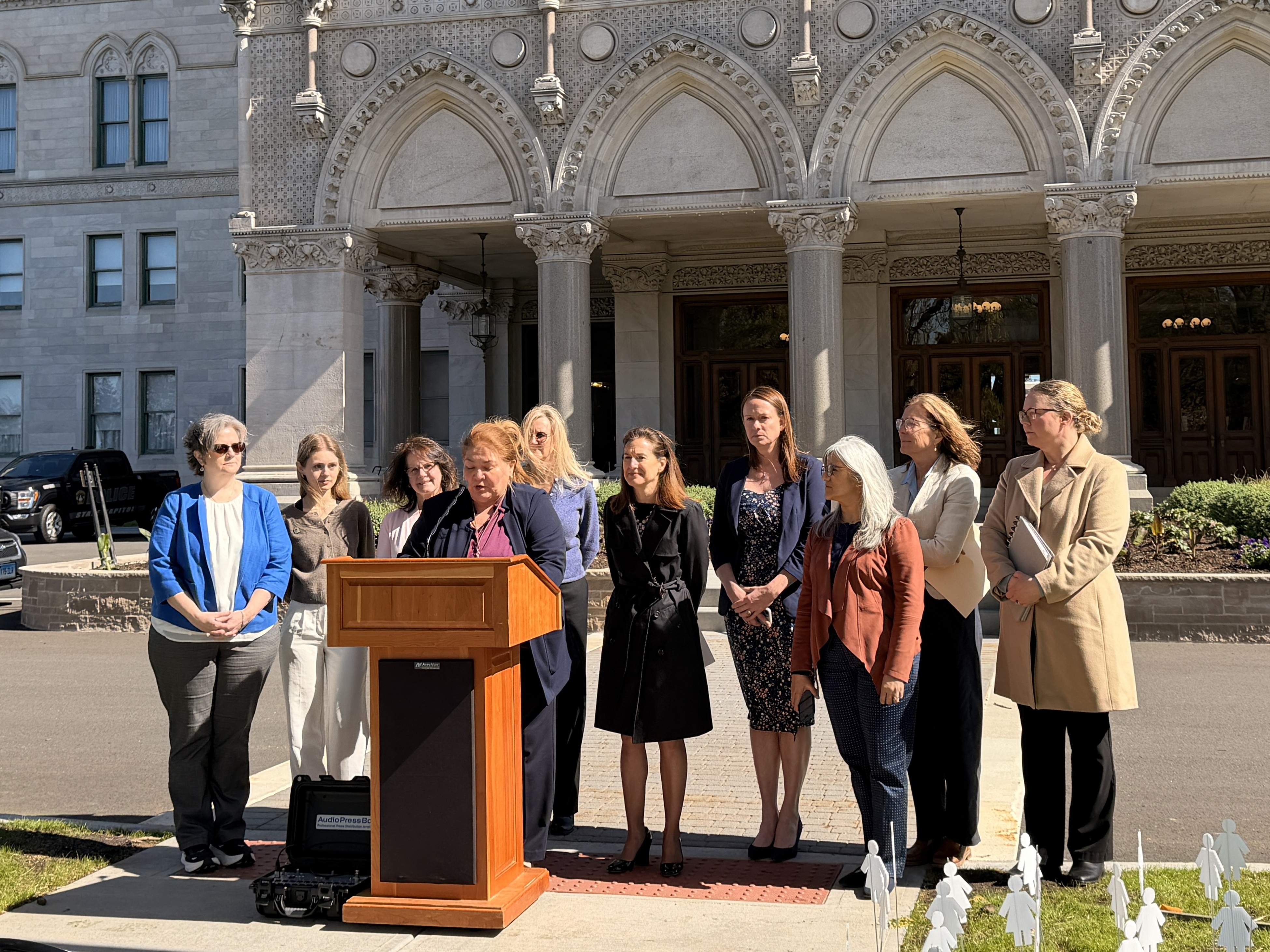
Press conference at the State Capitol, Hartford, CT, held in support of passing Senate Bill 259, April 27, 2026

State Capital in Hartford, CT
Bill 257 strengthens protections against FGM/C in Connecticut and leaves eight remaining U.S. states with no law explicitly banning this harmful practice.
Bill 259 will establish the crime of female genital mutilation in Connecticut and set higher safeguards for girls, including:
* Allowing testimony outside the courtroom for victims aged 12 or younger;
* Prohibiting a victim from being automatically deemed incompetent to testify because of their age;
* Waiving parent-child immunity in FGM/C cases, and enabling legal representatives to secure necessary parental testimony;
* Authorizing a civil action by a victim, and allowing civil actions within 30 years after the victim reaches the age of 18.
More than 2,500 women and girls in Connecticut have undergone or are at risk of FGM/C, giving the state the largest at-risk population in the U.S. without laws to ban the practice or protect survivors. Once Bill 259 is signed into law by Governor Ned Lamont, that will leave eight remaining U.S. states without a law explicitly banning FGM/C: Alabama, Alaska, Hawaii, Maine, Mississippi, Montana, Nebraska, and New Mexico.
Anastasia Law, Legal Advisor for North America at Equality Now, exclaimed, “The unanimous passing of Senate Bill 259 is the culmination of six years of campaigning by survivors, advocates, and civil society organizations striving to make Connecticut the 42nd state to ban female genital mutilation/cutting.
“We are overjoyed that Connecticut is closing a critical legal gap. By criminalizing FGM/C, this law will bring meaningful protections for thousands of women and girls and strengthen access to justice for survivors.”
FGM/C LEGISLATION IN CONNECTICUT
Bill 259 was introduced in February 2026 by Democratic State Rep. Jillian Gilchrest, following years of sustained advocacy by a broad coalition of survivor leaders, community groups, medical professionals, and human rights organizations.
On Monday, March 2, 2026, the state legislature held a public hearing to consider Bill 259, with survivors and women’s rights advocates campaigning to end FGM/C, describing the hearing as a decisive moment in a long-running effort to close dangerous legal gaps and prevent this ongoing form of gender-based violence.
Last week, Connecticut’s State Senate unanimously passed Bill 259, and a press conference at Connecticut’s State Capitol in Hartford was held on April 27, 2026, calling on lawmakers to commit to a future where no woman or girl is subjected to this harmful practice and to get the bill across the finish line. An art installation was erected alongside attendees to honor the women and girls impacted by FGM/C in the state. State Representatives, Rep. Laurie Sweet, Rep. Kathy Kennedy, Lt. Gov. Susan Bysiewicz, and Rep. Jillian Gilchrest were in attendance.
Following the bill's passage, survivor advocate Zehra Patwa acknowledged, “I’m overwhelmed with emotion and gratitude that Connecticut lawmakers have taken this powerful step to protect girls and women from FGM/C. As a survivor, this moment is deeply personal. It carries the weight of years of pain, resilience, and hope”.
“I am profoundly thankful to Susan Bysiewicz, Jillian Gilchrest, and Nicole Klarides-Ditria for their unwavering commitment and courage. Their steadfast support over so many years has helped turn what once felt impossible into reality,” Patwa added.
Previously, Connecticut legislators had made six unsuccessful attempts to pass a law addressing FGM/C. Proposed bills in 2018, 2020, and 2021 aimed at prohibiting FGM/C or studying its prevalence did not progress beyond the committee stage, while in 2019, a bill was rejected by the State Senate. In 2024, a drafted bill failed to be introduced, and in 2025, a bill was never raised to the House floor for a vote during the legislative session.
Mariya Taher, co-founder of Sahiyo, said, “To hear that Bill 259 passed the house feels amazing. When I reflect on all the work that went into this passage, all the workshops, all the trainings, all the testimony, I am just truly amazed at the persistence, resiliency, and mutual respect that allowed us to continue to work to advocate for this law.”
FGM/C IN THE UNITED STATES
FGM/C involves partially or completely removing, or causing other injury to female genitalia for non-medical reasons, causing severe lifelong physical and emotional trauma. Girls are typically subjected to FGM/C between infancy and age 18, often without anesthesia and occasionally resulting in fatal outcomes. FGM/C is also associated with complications during pregnancy and increased rates of maternal and infant mortality.
In March 2026, the Inter-American Commission on Human Rights, the principal human rights body for the Americas, called on governments, including the United States, to strengthen their responses to FGM/C, including through prevention, survivor support, and sustained investment. Reinforcing the need for comprehensive, enforceable protections across all levels.
While current U.S. federal law prohibits FGM/C through the STOP FGM Act, recent proposals like Congressional Bill H.R. 3492 wrongly conflate FGM/C with gender-affirming care, and seek to criminalize gender-affirming care for minors by expanding a law explicitly designed to protect women and girls from FGM/C. This risks undermining the enforcement of anti-FGM/C protections for survivors across the nation.
At least 577,000 women and girls are estimated to be at risk or affected by FGM/C in the United States. In passing S.B. 259, Connecticut is one step closer to aligning its legislation with international human rights standards.
Strong state-level laws, like Connecticut’s Senate Bill 259, are essential because state agencies and officials have far greater capacity than federal authorities to directly assist women and girls in local communities.
Bill 259 has been supported by the Connecticut Coalition to End FGM/C, a statewide alliance of organizations working to protect women and girls from this harmful practice and ensure survivor-centered justice. Coalition members include Equality Now, the U.S. End FGM/C Network, Sahiyo, the Connecticut Children’s Alliance, the Connecticut Commission on Women, Children, Seniors, Equity & Opportunity, and community-based advocates across the state.
**********************************************************
For more information, please see:
The Time Is Now: End Female Genital Mutilation/Cutting, An Urgent Need for a Global Response – Five Year Update’
https://equalitynow.org/news/press-releases/new-report-finds-female-genital-mutilation-cutting-in-94-countries/
Reporting on female genital mutilation - US factsheet
https://equalitynow.org/news/pressroom/write-for-rights-fgm/
* Photographed at the press conference held on April 27, 2026 in support of Senate Bill 259, at Connecticut’s State Capitol, in Hartford, standing left to right:
- Joanne Golden, Board of Directors, Sahiyo, and member of the Connecticut Coalition to End FGM/C
- Anastasia Law, Legal Advisor, North America, Equality Now, and member of the Connecticut Coalition to End FGM/C
- Rep. Kathy Kennedy, 119th District
- Rosemary Lopez (speaking in the photograph), Connecticut General Assembly Commission on Women, Children, Seniors, Equity & Opportunity
- Kelly Vaughan, founder of Global Girls Worldwide Women, and member of the Connecticut Coalition to End FGM/C
- Lt. Gov. Susan Bysiewicz
- Rep. Jillian Gilchrest, 18th District
- Zehra Patwa, FGM/C survivor, founder of We Speak Out, Chairperson, Board of Directors, Sahiyo, and member of the Connecticut Coalition to end FGM/C
- Dr. Joan Combellick, PhD, MPH, MSN, CNM, Yale School of Medicine
- Jo Keogh, Licensed Professional Counseling Associate and member, member of the Connecticut Coalition to End FGM/C
Mel Bailey
Equality Now
mbailey@equalitynow.org
Visit us on social media:
LinkedIn
Bluesky
Instagram
Facebook
YouTube
Legal Disclaimer:
EIN Presswire provides this news content "as is" without warranty of any kind. We do not accept any responsibility or liability for the accuracy, content, images, videos, licenses, completeness, legality, or reliability of the information contained in this article. If you have any complaints or copyright issues related to this article, kindly contact the author above.
