

RadioCult Breaks Down What Church Radio Stations Need From an Online Platform
News originally published by
EIN Presswire
RadioCult runs live services, recorded teaching and music programming for church and worship stations from one platform.
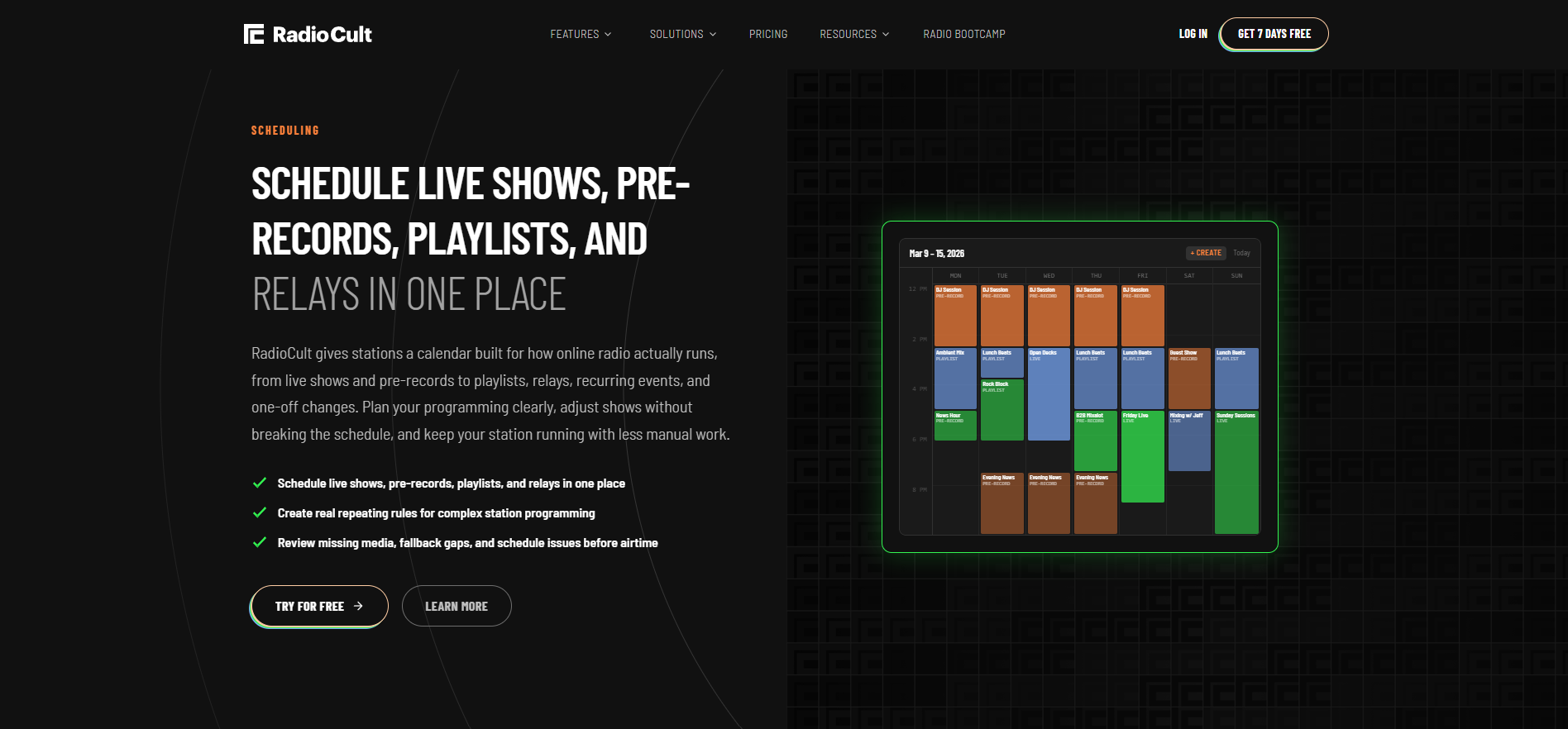
Church stations build a regular week of services, teaching and music on repeating rules, with one-off changes for festivals and special services.

Twelve months of listener history lets a church compare a festival season with the same season a year earlier.
Services, weekday teaching, volunteers and worship licenses: RadioCult sets out how a church station runs across the week and what to ask before choosing.
The audience for worship outside the building is well established. A Pew Research Center survey of 11,377 US adults, conducted in November 2022 and published in June 2023, found that 27 percent regularly watch religious services online or on TV, including 10 percent who watch but do not regularly attend in person. A radio station extends that reach from a single service to a full schedule that listeners can follow on a phone or computer at any hour, including people who are homebound, working on Sundays, or living away from their congregation.
A church station's schedule follows the church calendar rather than a radio format. The fixed point is usually a live service, often repeated later the same day or during the week. Around it sit recorded sermons and teaching, prayer and devotional programs, and blocks of worship music, with seasonal changes for Advent and Christmas, Lent and Easter, and special services or conferences. According to RadioCult, the practical test is whether the regular week can run on repeating rules with one-off changes layered on top, so a special service does not mean rebuilding the schedule, and the schedule listeners see matches what is on air.
Church stations are mostly run by pastors, worship leaders, and volunteers rather than radio professionals. A pastor may record a message midweek for broadcast on Sunday evening, a worship team may go live once a week, and a volunteer may look after the music that fills the gaps. Each needs enough access to do their part without being able to change the rest of the station, and because volunteers come and go, that access has to be easy to add and remove. RadioCult provides five built-in user roles and ties live access to scheduled events, disconnecting a presenter automatically when the slot ends, so handovers do not depend on someone remembering to step in.
For many churches, licensing worship music for online radio is where a station differs most from a streamed service. The licenses many churches already hold are written around worship services. CCLI's Church Copyright License, which CCLI says more than 230,000 churches and ministries worldwide use, covers reproducing worship songs and hymns. CCLI's Streaming License covers live-streaming or uploading recordings of worship services to a church website or social media channels, and its Streaming Plus License adds authorized song recordings and multitracks. A radio station that plays recorded music between services is a different use, so churches should confirm with each licensing body what their existing licenses cover. In the United States, an online station generally licenses the songs through a performing rights organization such as ASCAP, BMI, SESAC, or GMR, and the recordings through SoundExchange. Sermons, prayer, and teaching produced by the church are its own content, and spoken programming without music can often avoid licensing questions altogether. RadioCult does not bundle licensing into its plans, so the station holds its own licenses.
Measurement answers a pastoral question as much as a technical one: whether people are listening, from where, and at what times. RadioCult shows listener location down to country and city along with device and application details, keeps 12 months of historical listener data, and supports exports for reports, without collecting personal listener data. A full year of history lets a church compare a festival season with the same season a year earlier, or show its leadership and supporters how the station has grown. Because most listeners find a church station through the church itself, RadioCult's schedules, live-now details, chat, and recently played information can also be embedded on the church's own website.
Church stations are usually funded from a church budget or by donations. RadioCult plans start at $33 a month, yearly billing costs the equivalent of ten monthly payments, and students, educators, and non-profit organizations can request a further 20 percent off an annual plan.
There is no single best online radio platform for church and worship radio. A church that only wants to carry its Sunday service may be well served by the video stream it already runs, or by a simple audio stream. According to RadioCult, a radio platform becomes worthwhile when a church programs beyond its services, with several presenters, recorded teaching through the week, music between broadcasts, and a schedule listeners can follow.
"A church station follows the church calendar, not a radio format," said a RadioCult spokesperson. "The services are the easy part. What decides whether a church station lasts is who looks after the week in between, and whether its music is properly licensed."
RadioCult suggests churches settle four questions before choosing a platform: what the station will carry between services, who will present and run it and how their access will be managed, which licenses its music needs beyond the church's existing worship licenses, and how the church will know whether people are listening. Every RadioCult plan can be tried for seven days.
About RadioCult
RadioCult is an online radio hosting platform built for independent and community stations that broadcast 24/7 with multiple presenters. It combines live and automated broadcasting, radio-native scheduling, station and artist management, and unlimited concurrent listeners in one platform, with human support and pricing that starts at $33 per month. Learn more at https://www.radiocult.fm.
Corey Haines
Conversion Factory
Visit us on social media:
Instagram
Facebook
X
Legal Disclaimer:
EIN Presswire provides this news content "as is" without warranty of any kind. We do not accept any responsibility or liability for the accuracy, content, images, videos, licenses, completeness, legality, or reliability of the information contained in this article. If you have any complaints or copyright issues related to this article, kindly contact the author above.
